Think site inductions and risk assessments are only for big commercial sites? Think again.
Even the smallest home project — a kitchen refit, an extension, or a bit of roofing — needs them. And if your builder shrugs them off, that’s a red flag you shouldn’t ignore.
Why They Matter
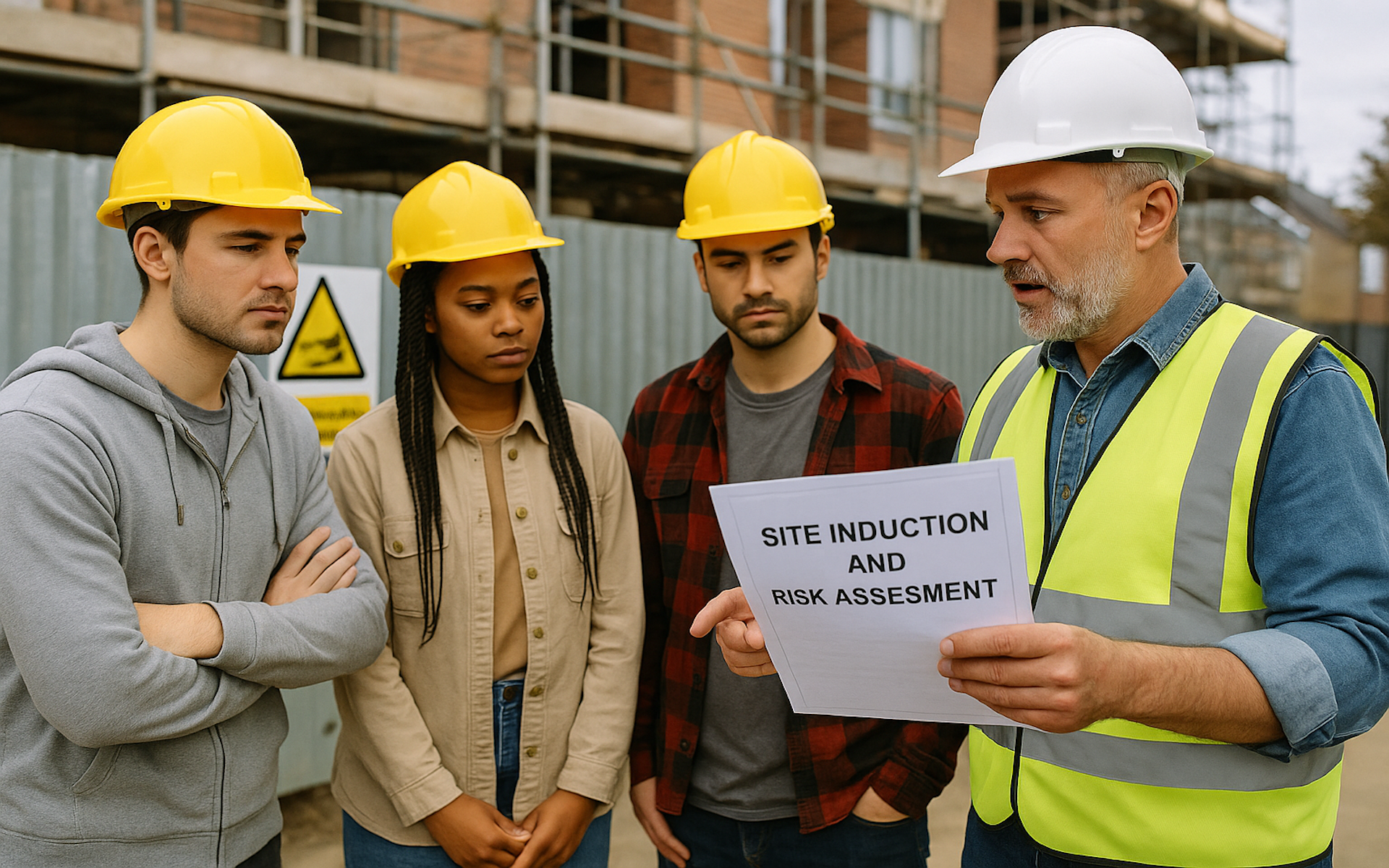
A site induction makes sure everyone on-site knows what’s going on — where the risks are, who’s in charge, and what safety measures are in place.
A risk assessment shows that your builder has actually thought about how to stop people getting hurt.
No induction or assessment usually means one thing: your builder’s cutting corners.
What Can Go Wrong Without Them
-
Someone gets injured — and the homeowner gets dragged into it.
-
Damage happens because hazards weren’t managed.
-
Work stops when inspectors or insurers step in.
And remember: if a serious accident happens on your property, you could be held partly responsible.
What You Should Expect
Before work starts, your builder should:
-
Do a basic risk assessment (even if it’s a one-page checklist).
-
Walk you through a short site induction — who’s who, where’s safe, where’s not.
-
Explain emergency procedures, first aid, and PPE expectations.
If they don’t? Walk away. Anyone dismissing safety paperwork as “over the top” is not the type you want on your property.
Bottom Line
Proper inductions and risk assessments aren’t red tape — they’re proof you’re dealing with a professional who takes safety and compliance seriously.
Because when a builder cuts corners on safety, it’s usually just the start of what else they’ll cut.
Subscribe to Our Newsletter
Keep in touch with our news & offers