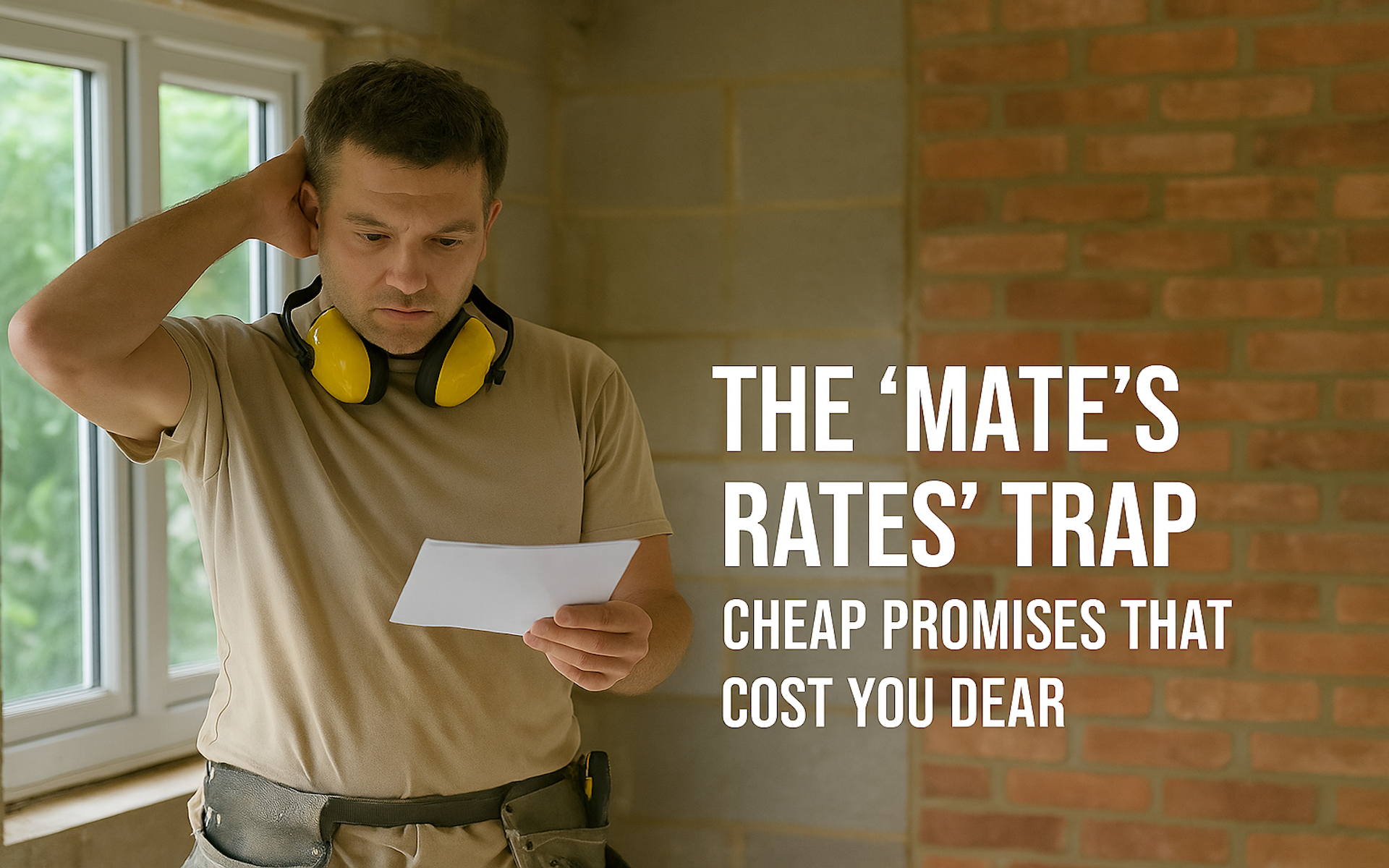
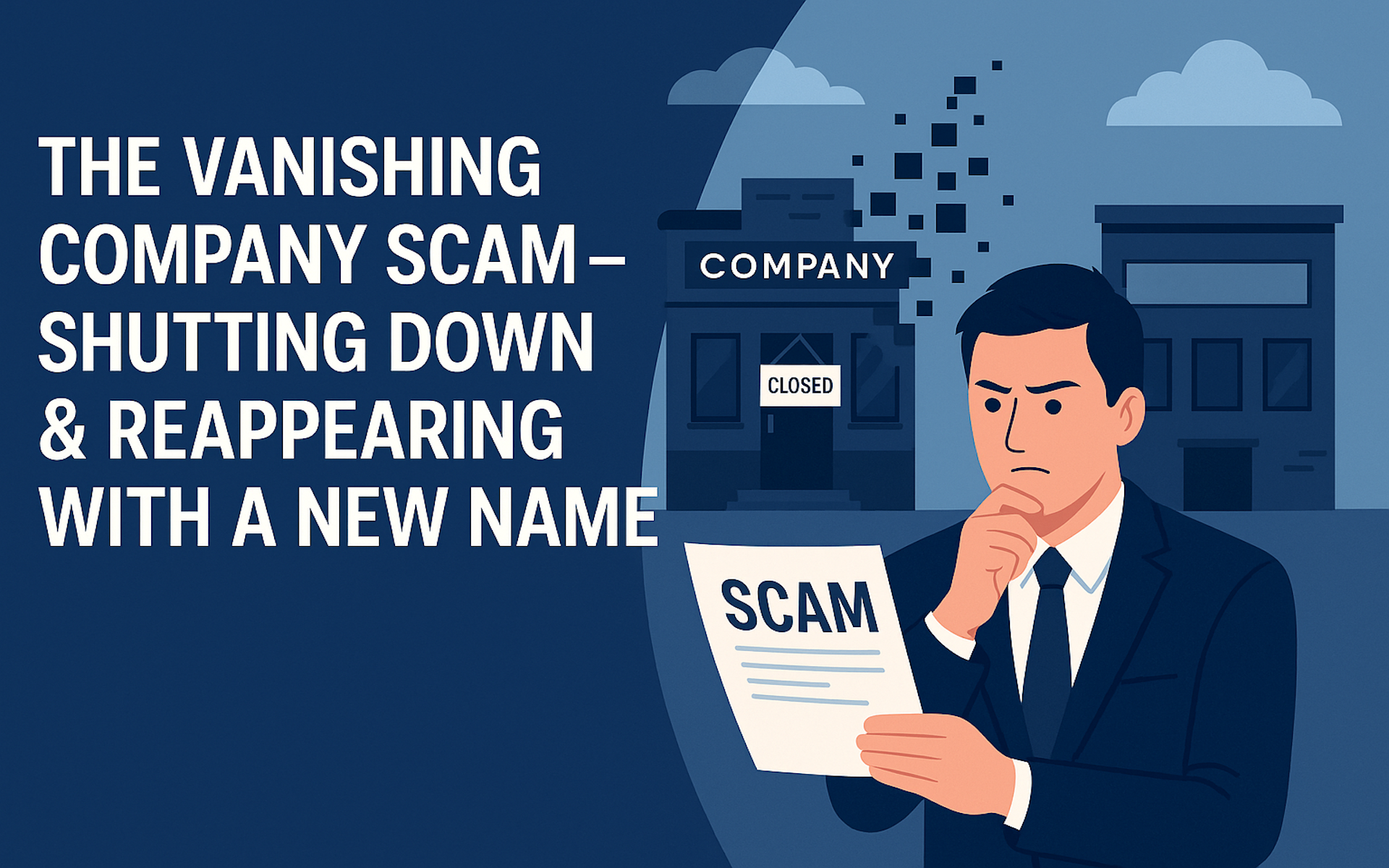
If your builder’s asking for big chunks of money upfront — stop right there.
That’s not how professional building work should be run.
A proper payment schedule protects you and proves the job’s being done above board and in line with your consumer rights.
Why Payment Schedules Matter
Rogue builders love vague payment terms — it’s how they get cash fast, then disappear before the work’s done.
A clear schedule does the opposite: it ties payments to progress and keeps everyone accountable.
Without one, you’re handing over control of your money — and your project.
The Right Way to Set It Up
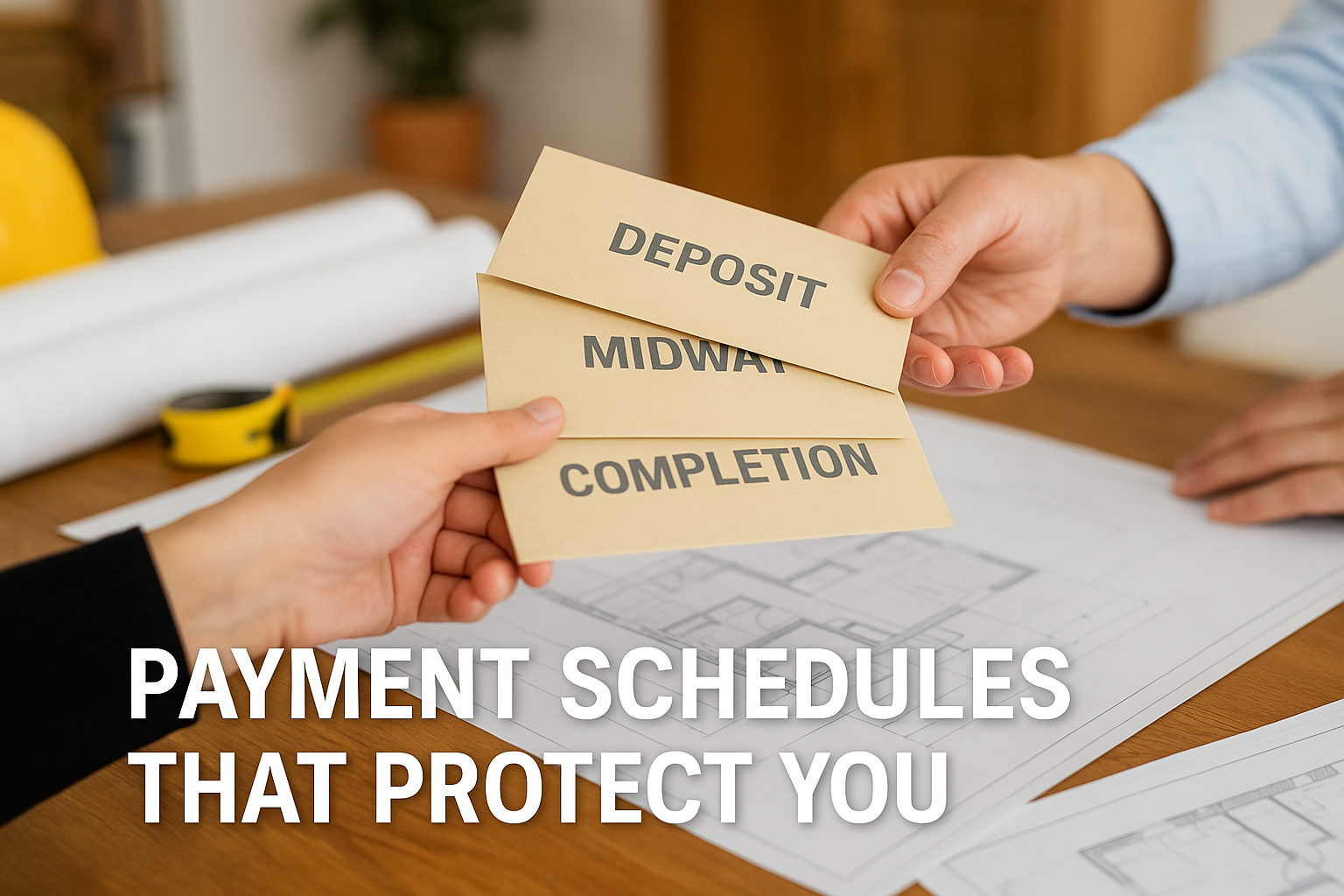
✅ Deposit: No more than 10–15% to secure materials or book a slot.
✅ Stage Payments: Each payment only after clear, visible progress — foundations, walls, roof, etc.
✅ Final Payment: Only when everything is complete, inspected, and certified.
✅ Receipts & Invoices: Every payment should be documented — no cash-in-hand mystery deals.
If your builder refuses or says, “we don’t do paperwork,” that’s your cue to walk.
Your Legal Protection
Under Consumer Rights law, builders must:
Deliver work with reasonable care and skill
Stick to the agreed price and schedule
Fix faults at their cost if the work isn’t up to standard
And if they ignore that, you’ve got the right to hold back payment until it’s put right.
Bottom Line
A written payment schedule isn’t just paperwork — it’s your safety net.
It keeps the builder compliant, your money secure, and the project transparent.
Because if the payments aren’t structured, neither is the builder.
Topics:money scam
Subscribe to Our Newsletter
Keep in touch with our news & offers